
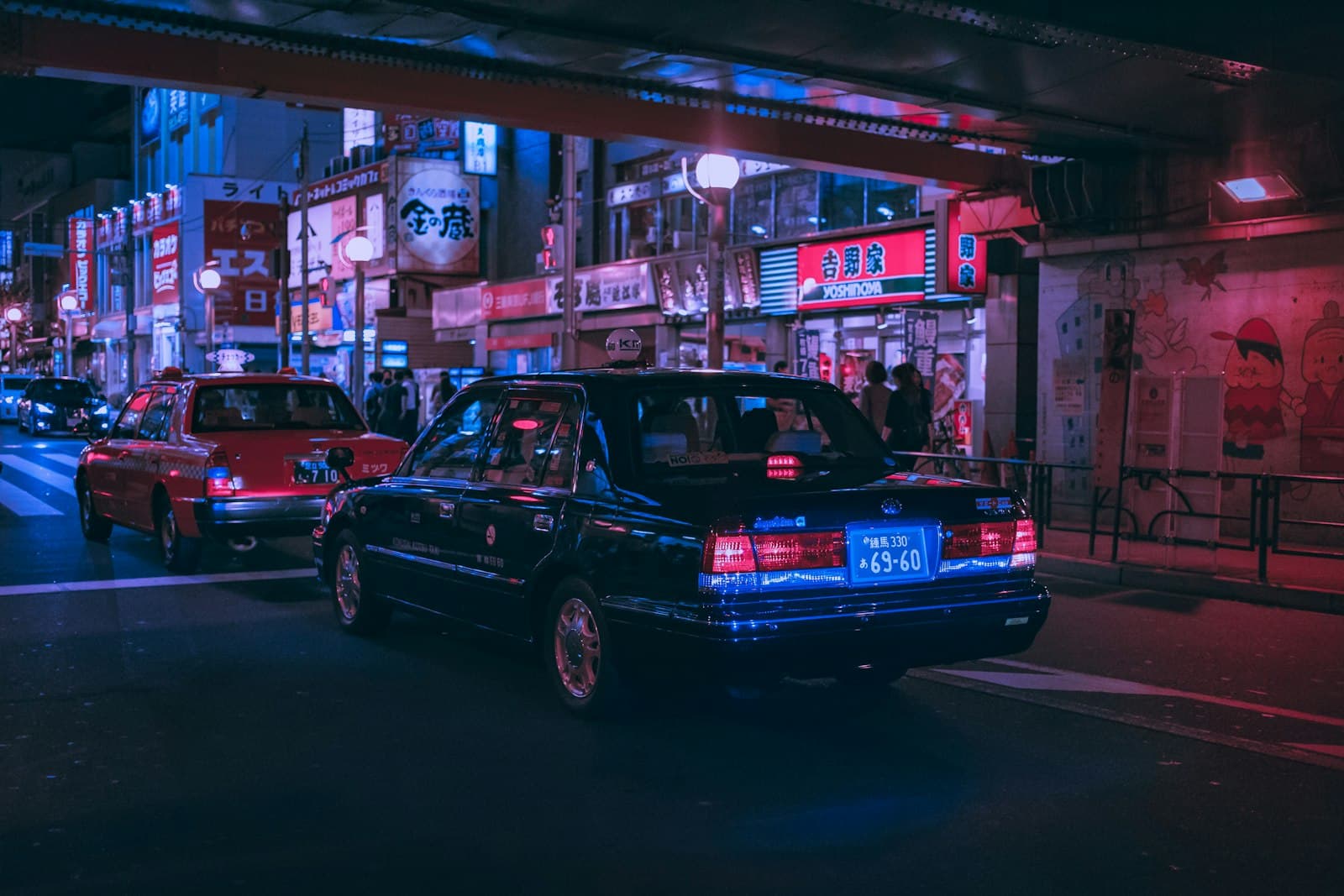
Type "cyberpunk anime" into most AI generators and you get a character standing in front of some purple buildings. It reads as sci-fi, but it isn't cyberpunk — the genre lives in the lighting, the density, and the wet reflections, not in the color purple. Getting the real look means prompting for the specific ingredients that define it, and most people name none of them.
This guide breaks cyberpunk anime into the four elements that actually produce the style, with prompt keywords for each. Everything here runs in Imageny's image generator, and there's a dedicated cyberpunk style page with live examples to study.
What actually makes art look cyberpunk?
Cyberpunk is a lighting and environment style before it's anything else. Four elements carry almost all of the effect:
- Neon as the light source, not decoration. In a real cyberpunk frame, the neon signs light the character's face and clothes. The glow bounces off skin, hair, and puddles. Prompting "neon signs in background" puts them behind the subject; prompting "lit by neon rim light, magenta and cyan glow on the face" makes the light do the work.
- A tight two-color palette. The signature look leans on two complementary neons — usually magenta/pink against teal/cyan, sometimes orange against blue. Naming the exact pair keeps the model from spreading into a rainbow that reads as generic sci-fi.
- Wet, reflective surfaces. Rain-slicked streets, damp pavement, condensation on glass. Reflections double every light source and are the fastest way to signal the genre.
- Density and signage. Cluttered overhead wires, stacked holographic ads, kanji and katakana signage, steam from vents. Emptiness reads as clean sci-fi; clutter reads as cyberpunk.
Miss these and you get a character in a blue city. Include them and the style appears almost on its own.
What prompt keywords produce the cyberpunk anime look?
Build the prompt in the five-part order our prompt guide recommends — subject, style, lighting, environment, framing — and load the style and lighting slots with cyberpunk-specific terms:
[subject], cyberpunk anime style, neon rim lighting, magenta and cyan palette, rain-slicked neon street at night, holographic signage, cinematic wide shot
Filled in:
a lone courier in a worn jacket, cyberpunk anime style, lit by magenta and cyan neon, rain-slicked street reflecting the signs, dense holographic ads overhead, steam rising from a vent, cinematic wide shot
The parts pulling the most weight:
- "Lit by magenta and cyan neon" ties the light to a palette in one phrase, doing two jobs at once.
- "Rain-slicked street reflecting the signs" forces the reflections that sell the genre.
- "Dense holographic ads overhead" adds the clutter that separates cyberpunk from clean sci-fi.
A negative prompt helps here too. Adding daylight, clear sky, empty street, muted colors steers the model away from the failure modes that flatten the look.
Should I generate a character or a scene?
The style splits into two shots, and they want different prompts:
- Character-forward — a close or medium shot where neon lights the face. Here the lighting keywords matter most, because the environment is soft background bokeh. Great for avatars and character art; see the anime PFP guide for framing a portrait that survives a small crop.
- Environment-forward — a wide shot where the city is the subject and a small figure gives it scale. Here the density and signage keywords matter most.
Decide which one you're making before you prompt, and weight the keywords accordingly. Trying to get a detailed face and an epic cityscape in the same frame usually gets you a mediocre version of both.
How do I keep the neon from blowing out?
The most common cyberpunk failure is the opposite of too dark: everything glows until the image is a bright smear with no depth. Three fixes:
- Anchor the darks. Add
deep shadows, high contrast, mostly dark frame with neon accents. Cyberpunk is a dark style punctuated by light, not a bright one. - Limit the palette on purpose. Two neons plus black. Every extra color you name dilutes the contrast that gives the style its punch.
- Put the light somewhere specific. "Neon glow" everywhere is flat. "Neon sign lighting the left side of the face, right side in shadow" gives you the directional, cinematic look the genre is known for.
If a result is close but muddy, change only the lighting phrase and regenerate. Lighting is almost always the variable that decides whether a cyberpunk frame works.
Make your first cyberpunk frame
Open the playground, paste the scene template above, and swap in your own subject. Generate a batch, then pick the one with the darkest shadows and the cleanest two-color glow — that's the one that reads as cyberpunk rather than generic sci-fi. Free credits are included when you sign up, and the cyberpunk style page is there whenever you want a reference to match.
Cover photo by Matthieu Bühler on Unsplash.